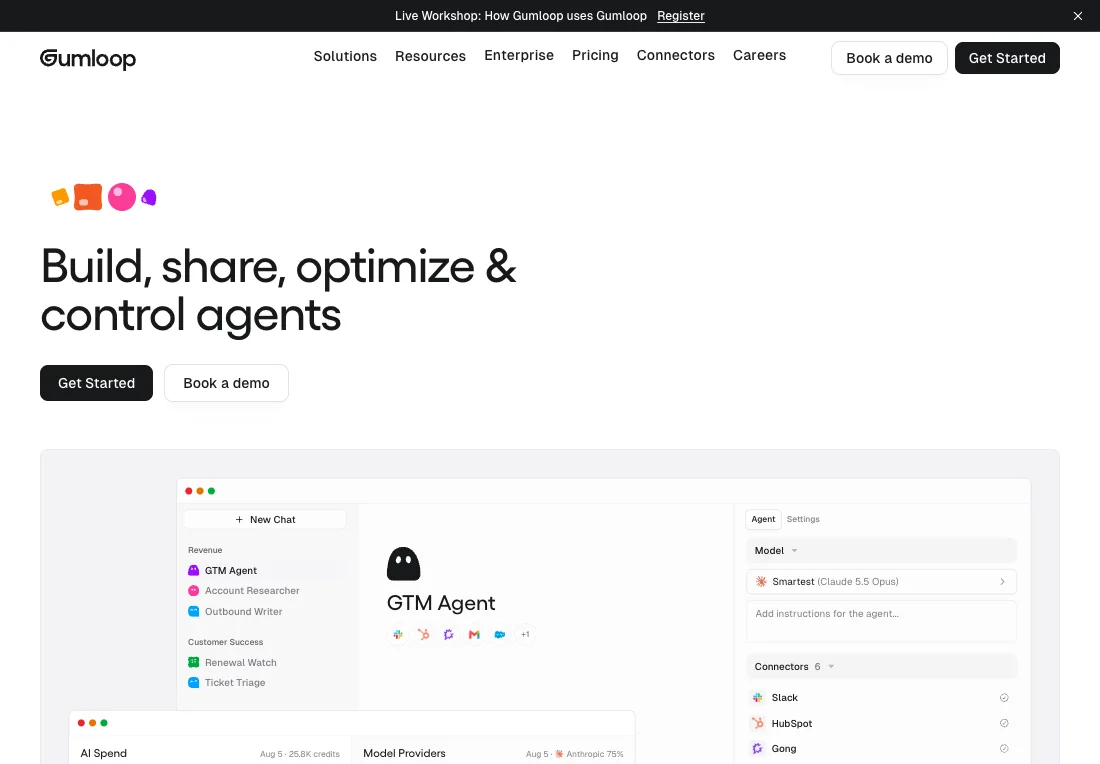
Showing 8 candidates from 11 other directory profiles. Candidates are ordered by overlap in their stated audiences. Read each audience, verdict and limitation against your actual task; similar audience descriptions do not establish equivalent capabilities or better performance.
Agent and workforce builder for connected business tasks.
Best for: Operators building shared agents and connected business workflows.
Pros
- Agents can combine configured tools, knowledge and multi-agent workforces.
- Shared chat and scheduled triggers support team workflows.
- Published Pro documentation explicitly includes model BYOK.
Cons
- The Free plan is explicitly retired for new and existing accounts.
- Actions and Vendor Credits need separate budget tracking.
- A full managed computer or VM was not confirmed in the checked sources.
Relevance AI fits teams designing reusable business agents; I do not recommend it when you need an ongoing free plan or want to avoid managing workflow meters.
Official Relevance AI source
Why consider it: Relevance AI offers this documented reason to compare it with Gumloop: Agents can combine configured tools, knowledge and multi-agent workforces. Its stated audience is Operators building shared agents and connected business workflows.
Agentic work across Claude apps and Claude Code.
Best for: People working across documents, research and coding tasks.
Pros
- Claude Code can run sessions on Anthropic-managed cloud infrastructure.
- Claude apps combine document work, research and connected tools.
- Claude Code supports an Anthropic API key or supported cloud-provider authentication.
Cons
- Cloud sessions and other agent features depend on plan and permissions.
- App subscriptions and API-key usage are different billing paths.
- A single setup score is unconfirmed across the different Claude surfaces.
Claude fits people moving between documents and coding; I do not recommend it when you need one uniform runtime and billing model across every agent feature.
Official Claude source
Why consider it: Claude offers this documented reason to compare it with Gumloop: Claude Code can run sessions on Anthropic-managed cloud infrastructure. Its stated audience is People working across documents, research and coding tasks.
AI teammate for inbox, calendar and connected work.
Best for: Operators delegating inbox, calendar and shared team tasks.
Pros
- Email, calendar and shared Slack workflows are documented.
- Routines can run recurring tasks and follow-ups.
- Seat credits are pooled across the workspace.
Cons
- The documented first workflow needs Slack permissions and connected accounts.
- Starter credits expire after seven days.
- Model BYOK and the exact managed sandbox boundary remain unconfirmed.
Lindy fits connected inbox and team routines; I do not recommend it when your organization cannot grant the account access those workflows require.
Official Lindy source
Why consider it: Lindy offers this documented reason to compare it with Gumloop: Email, calendar and shared Slack workflows are documented. Its stated audience is Operators delegating inbox, calendar and shared team tasks.
AI agent that works in a cloud sandbox.
Best for: People delegating browser research, reports and document tasks.
Pros
- An isolated cloud VM per task supplies a browser and file tools without a local setup.
- Research, reports and slides fit its documented deliverable workflows.
- Manus Flex accepts supported provider API keys.
Cons
- Daily free credits require login, do not roll over and have a monthly cap.
- Flex still consumes Manus infrastructure credits in addition to provider charges.
- Sleeping sandboxes can be recycled; a task sandbox is not an always-on server.
I would shortlist Manus for browser research and deliverables; I do not recommend it when you need an always-on server or a predictable flat bill for heavy usage.
Official Manus source
Why consider it: Manus offers this documented reason to compare it with Gumloop: An isolated cloud VM per task supplies a browser and file tools without a local setup. Its stated audience is People delegating browser research, reports and document tasks.
Workflow automation with configurable AI agents and tools.
Best for: Operators wiring AI agents into repeatable business workflows.
Pros
- AI agents can be combined with workflow nodes and connected services.
- Provider credentials are supported for model nodes.
- Cloud and self-hosted deployment options are documented.
Cons
- Self-hosting adds infrastructure maintenance.
- Workflow execution quotas and model costs are different budget items.
- Hosted workflows do not establish a full managed computer or sandbox.
n8n fits people who want explicit workflow control and model credentials; I do not recommend it when nobody can maintain integrations or a self-hosted deployment.
Official n8n source
Why consider it: n8n offers this documented reason to compare it with Gumloop: AI agents can be combined with workflow nodes and connected services. Its stated audience is Operators wiring AI agents into repeatable business workflows.
Cloud agent for building and publishing applications.
Best for: People building applications and prototypes in a hosted workspace.
Pros
- Agent can create and modify apps in the hosted project environment.
- Building, preview and publishing are integrated in the product.
- Starter access supports a limited first build and published app.
Cons
- The free published app expires after 30 days.
- Full build and third-party connectors require a paid upgrade.
- Agent model BYOK and one setup score remain unconfirmed.
Replit fits people who want building and publishing in one workspace; I do not recommend it when a free prototype must remain published beyond the documented allowance.
Official Replit source
Why consider it: Replit offers this documented reason to compare it with Gumloop: Agent can create and modify apps in the hosted project environment. Its stated audience is People building applications and prototypes in a hosted workspace.
AI software engineer that writes, runs, and tests code.
Best for: Engineering teams delegating repository tasks to a cloud coding agent.
Pros
- Cloud sessions provide an environment for writing, running and testing code.
- Documented repository and issue-tracker integrations support delegated engineering work.
- Pro includes access to cloud agents without maintaining your own execution VM.
Cons
- Repository access and a working development environment need onboarding.
- Additional usage can add cost beyond the subscription allowance.
- Provider BYOK remains unconfirmed; do not purchase it assuming that support.
I would shortlist Devin for scoped repository tasks a developer can review; I do not recommend it when nobody can configure the environment or validate the code.
Official Devin source
Why consider it: Devin offers this documented reason to compare it with Gumloop: Cloud sessions provide an environment for writing, running and testing code. Its stated audience is Engineering teams delegating repository tasks to a cloud coding agent.
Coding agents with managed and self-hosted execution.
Best for: Engineering teams choosing cloud or self-hosted coding agents.
Pros
- Managed Cloud provides hosted execution and sandbox infrastructure.
- Agent Canvas can connect to local, self-hosted or managed backends.
- The published pricing explicitly supports bring-your-own model keys.
Cons
- Self-hosted and managed Cloud deployments have different responsibilities.
- Free self-hosted software does not include inference or hosting costs.
- The public Teams quote should not be read as a managed Cloud entry price.
OpenHands fits engineering teams choosing their execution infrastructure; I do not recommend it when you expect a free self-hosted client to include model and hosting costs.
Official OpenHands source
Why consider it: OpenHands offers this documented reason to compare it with Gumloop: Managed Cloud provides hosted execution and sandbox infrastructure. Its stated audience is Engineering teams choosing cloud or self-hosted coding agents.